Powell Slams DOJ Probe as Assault on Fed Rate Independence
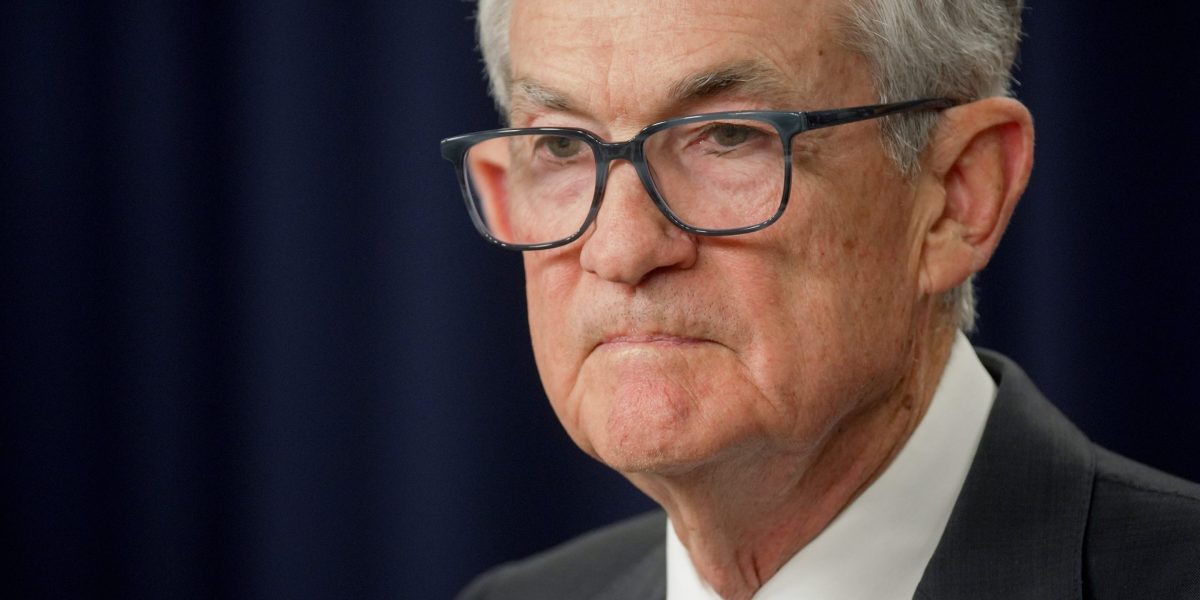
Jerome Powell, the Chairman of the United States Federal Reserve, has publicly criticized the Trump administration for what he describes as a direct assault on the central bank’s longstanding independence. In a strongly worded statement, Powell asserted that a criminal investigation launched by the Department of Justice is fundamentally linked to the Federal Reserve’s decision not to reduce interest rates earlier in the year, despite intense pressure from President Donald Trump to do so.
Powell issued this pointed declaration in a formal statement released on Sunday, wherein he revealed that the Justice Department had issued grand jury subpoenas to the Federal Reserve. These subpoenas appear to target his congressional testimony from last June, which addressed the ongoing renovations at the Fed’s headquarters building—a project that has unfortunately experienced substantial cost overruns.
Known for his generally measured and reserved tone in public communications, Powell left no room for ambiguity in his assessment of the investigation’s motivations. He explicitly characterized the probe as politically motivated, insisting that neither the headquarters renovations nor his Senate testimony provided any legitimate basis for it. Instead, he labeled these elements as mere pretexts designed to mask the true intent behind the action.
In his written remarks, Powell elaborated that the looming threat of criminal charges stems directly from the Federal Reserve’s commitment to establishing interest rates according to its independent evaluation of what best serves the broader public interest, rather than bending to the personal directives or preferences expressed by the President of the United States.
Powell framed the core issue in stark terms: whether the Federal Reserve can persist in determining monetary policy through objective analysis of economic data and prevailing conditions, or if it will succumb to being steered by external political pressures and coercive tactics. This question, he implied, strikes at the very foundation of the institution’s operational autonomy.
Throughout his tenure, Powell emphasized that he has dutifully served under administrations led by both Republican and Democratic presidents alike, always prioritizing the Federal Reserve’s statutory dual mandate—achieving price stability while promoting maximum sustainable employment—without succumbing to partisan influences or favoritism.
He underscored a resolute principle of public service, noting that it occasionally demands resolute defiance in the presence of overt threats or intimidation. Powell affirmed his unwavering dedication to fulfilling the responsibilities entrusted to him by the Senate, guided by principles of integrity and an unyielding focus on advancing the welfare of the American populace.
This bold statement emerged amid reporting from The New York Times indicating that the U.S. Attorney’s Office in the District of Columbia has initiated a criminal inquiry into Powell, scrutinizing whether he provided misleading information to the Senate Banking Committee regarding the full extent and projected costs of the headquarters renovation initiative, which have ballooned to an estimated $2.5 billion.
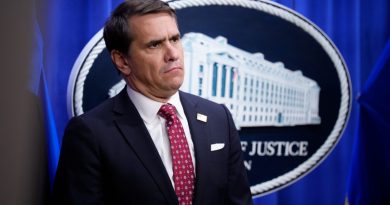
According to sources cited by the Times, Jeanine Pirro—a prominent and long-standing ally of Trump who now oversees the federal prosecutors’ office in Washington, D.C.—personally authorized the commencement of this investigation.
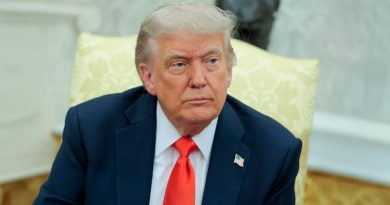
President Trump, when questioned about the matter by NBC News, claimed ignorance regarding the specifics of the DOJ’s subpoenas directed at the Fed. Nevertheless, he offered a sharp critique of Powell, remarking that the Fed Chair has underperformed in managing the central bank and has similarly faltered in overseeing construction projects, alluding disparagingly to the renovation overruns.
Christopher Hodge, the chief U.S. economist at Natixis CIB Americas, shared his insights with Fortune via email, observing that financial markets have endured a full year of repeated warnings and rhetoric concerning encroachments on Federal Reserve independence, yet they have largely dismissed these as inconsequential noise. However, Hodge cautioned that such tolerance has limits, predicting that sustained pressure will eventually reach a critical threshold where confidence erodes irreversibly.
Drawing an analogy to the proverbial straw that breaks the camel’s back, Hodge explained that no single event alone causes collapse; rather, it is the cumulative burden of incremental strains that proves decisive. He further noted that should the investigation implicate Powell, it would almost certainly ensnare the entire Federal Reserve Board, thereby severely undermining the institution’s reputation as a reliable and impartial authority on economic policymaking.
With his background as a principal economist at the New York Federal Reserve, Hodge viewed the current DOJ inquiry as yet another incremental burden being placed upon the already strained framework of central bank autonomy under the current administration.
The issuance of these subpoenas represents the most recent escalation in President Trump’s ongoing campaign against Powell and the Federal Reserve more broadly. For months, Trump vocally lambasted the central bank for delaying interest rate reductions, and even after the Fed initiated easing measures in September, he demanded deeper and more aggressive cuts.
Beyond mere verbal barrages, Trump has explored more drastic measures, including contemplating Powell’s outright dismissal and publicly floating the idea of pursuing legal action against him related to the escalating renovation expenses. Additionally, efforts persist to oust Federal Reserve Governor Lisa Cook, whom Trump announced for removal last year on allegations of mortgage fraud—a charge she has vehemently denied while mounting a legal challenge to her termination. This dispute now awaits resolution before the Supreme Court.
Powell’s chairmanship is scheduled to conclude in May, and Trump has indicated that he has already identified a preferred successor. Among the leading contenders are current Fed Governor Christopher Waller, National Economic Council Director Kevin Hassett, and former Fed Governor Kevin Warsh.
Although Powell’s term as a regular Fed governor extends through 2028, historical precedent among past chairs suggests they typically depart the board shortly after their leadership tenure ends, rather than lingering in a subordinate capacity.
Market participants and analysts had anticipated that Powell would adhere to this norm, particularly following the recent reappointment of the Federal Reserve’s regional bank presidents—a development that allayed concerns about a potential purge aimed at installing loyalists on the Federal Open Market Committee.
However, Powell’s uncharacteristically vehement rebuttal to the Justice Department’s probe signals a shift, rendering it far less probable that he will quietly step aside in the near term. This episode underscores deepening tensions between the executive branch and the Federal Reserve, with profound implications for the future conduct of U.S. monetary policy and the perceived credibility of the nation’s central banking system.
The broader context reveals a pattern of friction that has persisted throughout Trump’s tenure, where repeated calls for accommodative policy adjustments clashed with the Fed’s data-driven approach. Economists like Hodge highlight how markets have shown remarkable resilience to such political noise thus far, but warn that ongoing legal entanglements could precipitate a crisis of confidence, potentially destabilizing financial stability and complicating the Fed’s efforts to navigate post-pandemic economic recovery challenges.
Powell’s defense of institutional independence also resonates amid wider debates about the appropriate boundaries between elected officials and technocratic bodies tasked with long-term economic stewardship. His invocation of serving without ‘political fear or favor’ reaffirms a commitment to apolitical decision-making, even as external pressures mount from multiple directions, including fiscal policy initiatives and trade agendas that intersect with monetary considerations.
As the investigation unfolds, stakeholders across Wall Street, Capitol Hill, and global financial centers will closely monitor its trajectory, recognizing that the outcome could redefine norms around central bank autonomy for generations to come.